


Every location shoot introduces variables that don’t exist on a studio set. The controlled environment of a studio — known infrastructure, fixed emergency procedures, permanent first aid facilities, predictable access — is replaced by something dynamic, unfamiliar, and often significantly more complex to manage safely.
Remote and international location shoots amplify every one of those variables. Add distance from medical facilities, unfamiliar regulatory frameworks, language barriers, logistical complexity, and the communication challenges that come with operating far from your production’s home base — and you have an environment that requires a level of safety planning and risk management that goes well beyond what most productions apply to studio-based work.
This post covers the key considerations for managing risk on remote and international location shoots — the planning, the documentation, the communication requirements, and the contingency thinking that separates productions that are genuinely prepared from those that are hoping for the best.
Start the Risk Assessment Earlier Than You Think You Need To
On a studio shoot, the environment is known. On a remote or international location, the risk assessment begins with a set of unknowns that need to be actively resolved — and that process takes time that productions frequently underestimate.
The risk assessment for a remote or international location should begin as early as possible in pre-production — ideally from the moment locations are being scouted. The safety officer should be involved in location recces, not consulted after locations have been locked. The gap between what a location looks like on a scout and what it looks like on a shooting day — with a full crew, equipment, vehicles, and weather conditions that may have changed — is where risks that weren’t identified early enough tend to surface.
Key questions to work through in the early risk assessment phase include: What are the specific hazards of this location — terrain, water, weather, infrastructure, wildlife? How far is the nearest medical facility and what level of care does it provide? What are the emergency service response times to this location? What communications infrastructure exists on location and what are the gaps? What are the local regulatory requirements that apply to this production’s activities?
Understand the Regulatory Environment Before You Arrive
One of the most significant risk management challenges of international production is the variation in health and safety regulatory frameworks across territories. The obligations that apply to your production in your home territory may not be the obligations that apply where you’re shooting — and in some cases the gap is significant.
This doesn’t mean that international shoots operate in a regulatory vacuum. Most territories have their own workplace health and safety legislation that applies to production activities within their borders. Understanding what those requirements are — and ensuring your production meets them — is a fundamental obligation that falls on the production company.
In practice, this means engaging local expertise early. A local safety officer or production services company with knowledge of the regulatory environment, established relationships with local emergency services, and familiarity with the specific hazards of the territory is not an optional extra on an international shoot — it’s essential risk management. The knowledge gap between a safety officer operating in a familiar environment and one operating in an unfamiliar territory is too significant to bridge through good intentions alone.
Medical Planning Is Not Optional
On a studio shoot, medical planning is relatively straightforward — established first aid provision, known proximity to hospitals, predictable access. On a remote or international location, medical planning requires significantly more thought and potentially significantly more resource.
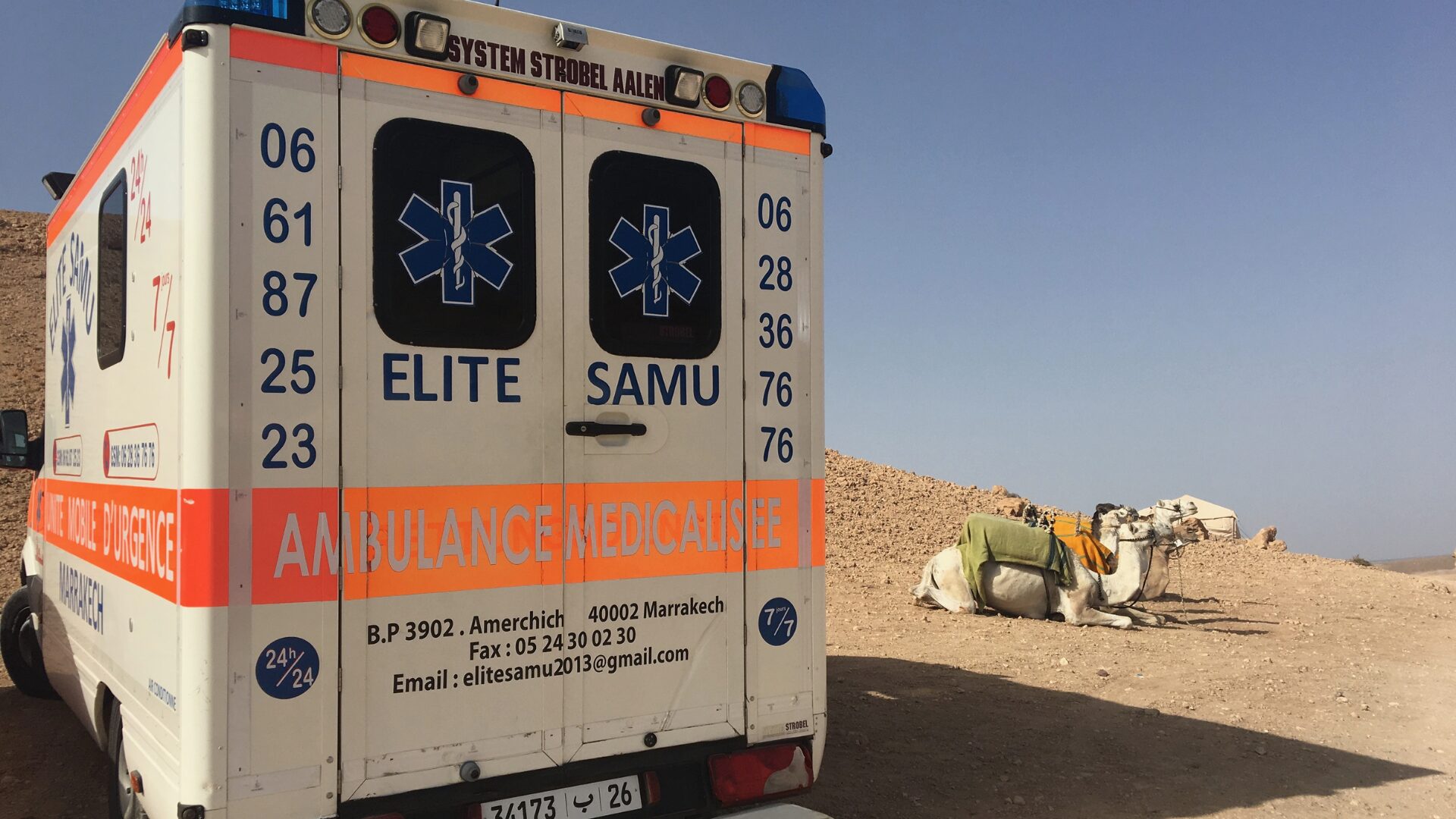
The starting point is an honest assessment of the medical risk profile of the location and the activities involved. A remote desert location with a full stunt team has a very different medical risk profile than a city-centre location with a small documentary crew. The medical planning needs to be proportionate to that profile.
Key elements of location medical planning include: first aid provision that is appropriate to the location’s distance from medical facilities — which may mean a higher qualification level or more extensive first aid kit than a standard production would carry; clear documentation of the nearest medical facilities, including their capability level; an established medical evacuation plan for serious incidents; and, for remote locations, consideration of whether a medic or paramedic should be part of the crew.
For international shoots, additional considerations include: travel health requirements for the territory, including vaccinations and prophylactic medications; health insurance that covers emergency medical treatment and evacuation; and an understanding of the local healthcare system, including which facilities are appropriate for which types of medical need.
Communication Infrastructure Is a Safety Requirement
On a location where mobile coverage is limited or absent, communication between the safety officer, department heads, and production leadership becomes a logistical challenge that needs to be planned for before it becomes an emergency.
The communication plan for a remote location should identify the coverage limitations of the location, establish what alternative communication infrastructure is available or needs to be brought in — satellite phones, two-way radios, or other systems — and ensure that every department head has a way to communicate with the safety officer and production leadership regardless of mobile coverage.
For international shoots, the communication plan also needs to address contact with the production’s home base, with local emergency services, and with the crew’s home-country emergency contacts where relevant. Time zone differences, language barriers, and the logistics of international communication in an emergency need to be worked through before they need to be navigated under pressure.
Crew Wellbeing on Remote and International Shoots
The physical and psychological demands of remote and international location shooting are significant — and the wellbeing risks that come with them are part of the risk assessment that every safety officer should be working through.
Extended periods away from home, accommodation and food quality that may be significantly below what crew are used to, physical exertion in challenging environmental conditions, exposure to unfamiliar health risks, and the isolation that comes with working in a remote environment all contribute to a wellbeing risk profile that requires active management.
Practical measures include: clear communication to crew about what to expect before they arrive on location — not after; adequate rest periods and turnaround times that account for the additional demands of the location; clear pathways for crew to raise wellbeing concerns; access to support resources where available; and a genuine commitment from production leadership to treating crew welfare as a non-negotiable rather than a secondary consideration.
Documentation on Location
The documentation requirements for a remote or international location shoot are the same as for any other production — but the logistical challenges of maintaining them are greater. The risk register that lives on a laptop at the production office is not accessible to a safety officer on location without reliable internet. The incident report form that requires someone to email it to the right person creates a gap when communications infrastructure is limited.
The documentation system for a remote or international location needs to be designed for the actual conditions of the location — accessible offline where necessary, functional on mobile devices, and structured to capture the information that matters without requiring connectivity that may not exist.
For productions that operate across multiple territories, the additional consideration of local regulatory documentation requirements — permits, location agreements, territory-specific compliance documentation — needs to be factored into the pre-production planning and managed through a system that can accommodate the complexity.
The Pre-Departure Checklist
Before any crew departs for a remote or international location, the following should be in place:
- Location-specific risk assessment completed and communicated
- Medical plan established including nearest facilities and evacuation procedure
- Communication plan confirmed including alternative infrastructure where needed
- Local regulatory requirements identified and met
- Local expertise engaged where required
- Crew briefed on location-specific hazards, emergency procedures, and wellbeing resources
- All documentation accessible to relevant crew on location
- Emergency contacts — local and home-base — confirmed and distributed
- Travel health requirements met
The Core Principle
Remote and international location shoots are inherently more complex to manage safely than controlled environments. That complexity doesn’t reduce the duty of care obligation — it increases the importance of meeting it thoroughly. The productions that manage remote and international shoots well are not the ones that adapt when things go wrong. They’re the ones that planned well enough that most things don’t.
SetConnect is built to support location safety management — with mobile-accessible risk registers, incident reporting, and documentation that works wherever your production takes you.
Case Studies
More our projects

Integrating Safety into the Heart of Environmental Storytelling
How a US factual series spotlighting global innovators and scientists utilized SetConnect to manage multi-location safety, communications, and operational readiness while filming in Nairobi, Kenya.

Elevating Field Safety for a Wildlife Documentary Series in Costa Rica
How an international wildlife documentary series filming in Costa Rica leveraged SetConnect to streamline field safety and enhance location oversight.
Get in Touch
This site is protected by reCAPTCHA and the Google Privacy Policy and Terms of Service apply.